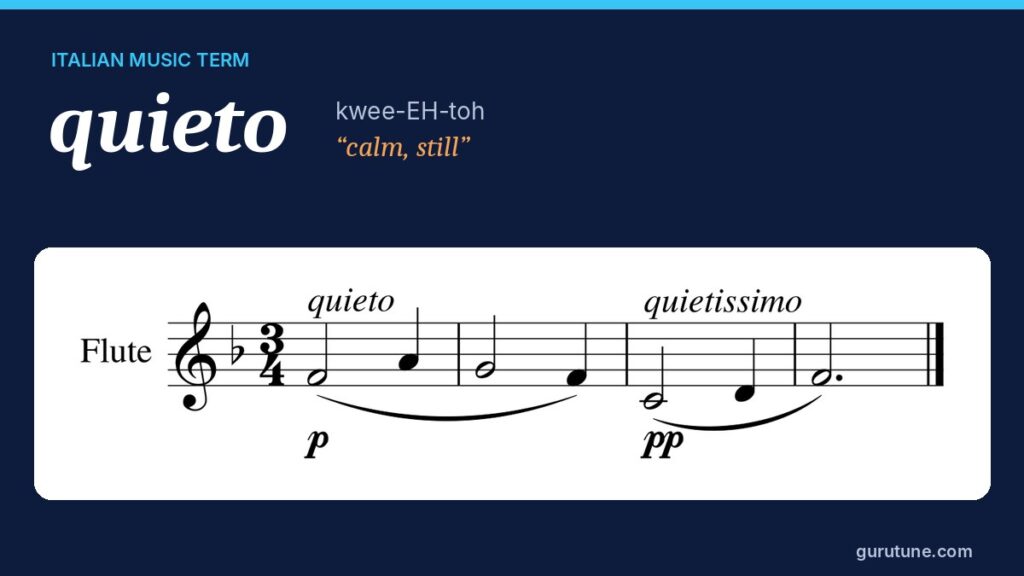
Quieto is Italian for “calm” or “still”. Music dictionaries translate it as quiet, serene and calm. Many players stop at “quiet” and simply play softer, but the word says just as much about mood. Quietissimo is the superlative form and means “very calm” or “as calm as possible”.
How to pronounce quieto and quietissimo
Quieto is pronounced kwee-EH-toh. Quietissimo is pronounced kwee-eh-TEE-see-moh, with the stress on the third syllable.
Calm is not the same as soft
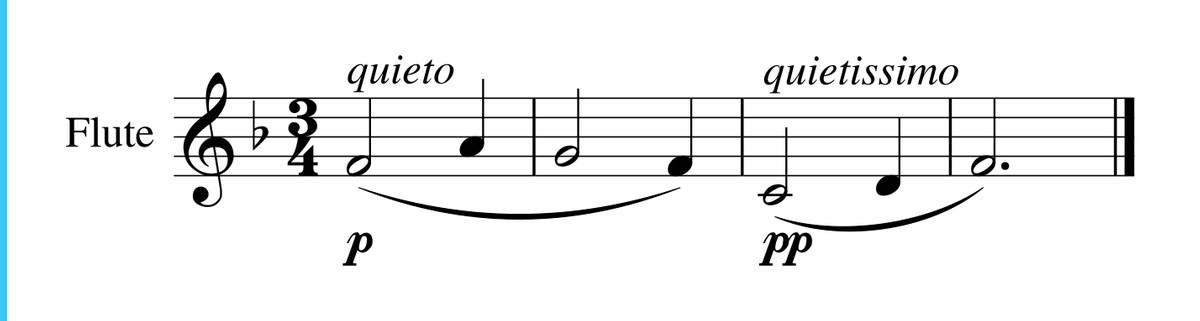
In Italian, the volume word is piano, meaning soft. Quieto belongs to a different family of instructions, the ones that describe character. A quieto passage should feel settled, peaceful and free of tension.
In practice, calm music is often played softly too. That is why the confusion is so common. Yet the two ideas can be separated. A melody can be loud and calm at the same time, like a broad, steady hymn. It can also be soft and restless, like a nervous whisper. Quieto asks for the first kind of feeling, whatever the dynamic marking says.
What quieto changes in your playing
Calmness affects several things at once:
- The pulse stays steady and unhurried, with no pushing forward
- Attacks are gentle, so notes begin softly rather than with a bite
- Phrases are long and connected, without sudden breaks
- Vibrato, for players who use it, is usually slower and narrower
- Accents are rounded off unless the composer asks for them
Quieto is not a tempo marking in the strict sense, and it does not tell you a speed. Still, calm music rarely feels rushed, so most performers choose a relaxed tempo within the range the composer allows.
Quietissimo: as calm as possible
Italian forms superlatives by adding the ending issimo. You know this pattern already from pianissimo, very soft, and fortissimo, very loud. Quietissimo works in the same way and pushes the calm character to its limit.
Composers use it for moments of complete stillness. Think of the last bars of a slow movement, a held chord that should hang in the air, or a passage that should feel almost motionless. Here every small movement of the bow, breath or hand should be smooth and invisible.
Related calm markings
Italian has several words for calm moods, and each has its own shade:
- Tranquillo means tranquil and peaceful, very close to quieto
- Calmo and calmato mean calm or calmed down
- Placido means placid and gentle
- Sereno means serene and bright
- Riposato means rested or relaxed
Quieto and tranquillo are so close that many musicians treat them as equal. The small difference is that quieto suggests stillness, the absence of movement, while tranquillo suggests peace of mind.
Practising calm playing
Choose a slow scale and play it very evenly at a gentle volume. Then play it again at a fuller volume while keeping exactly the same calm feeling. If the louder version starts to sound urgent, you have found the difference between volume and character. Train until both versions feel equally settled.
Free printable card
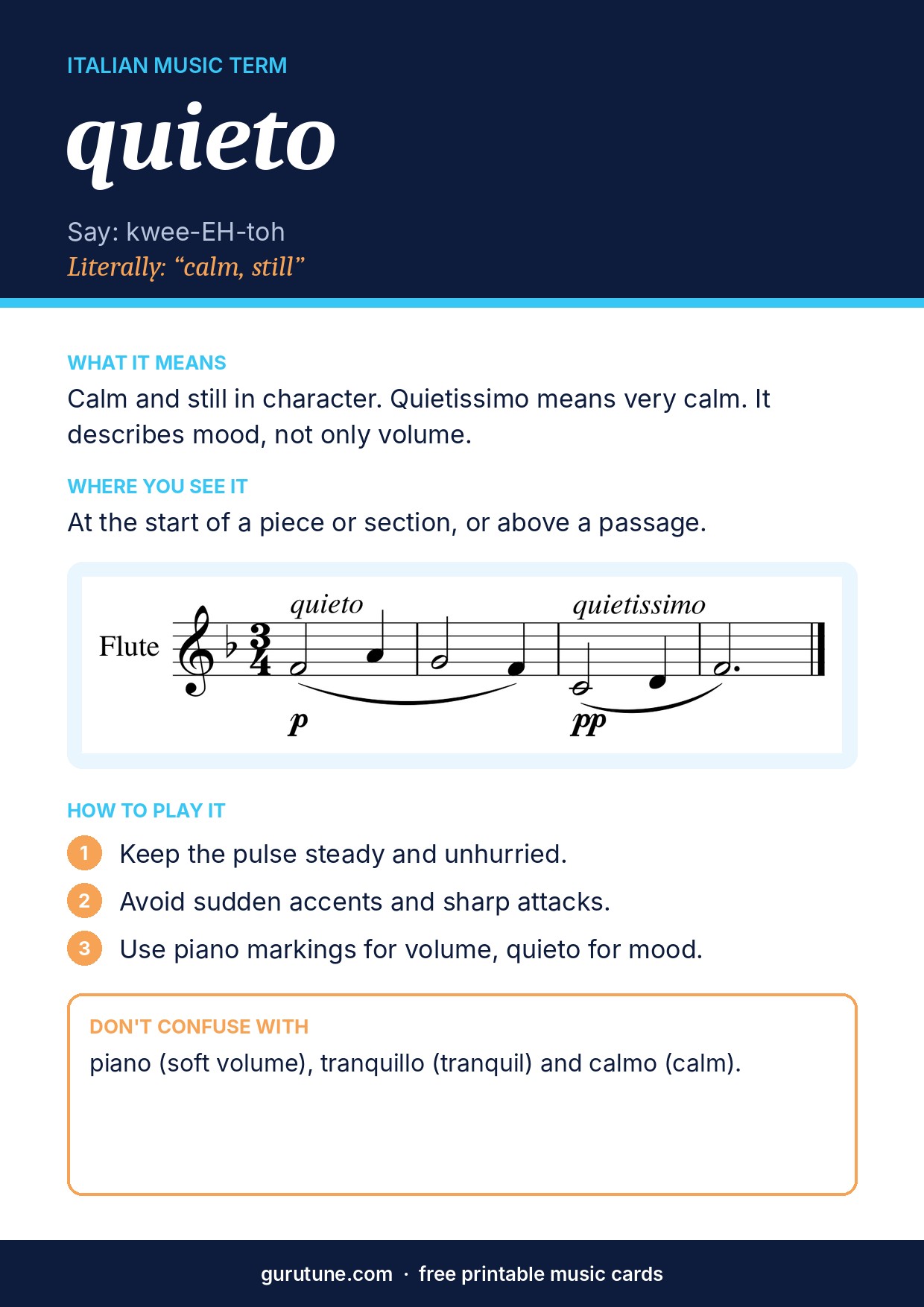
Print this card on A4 and keep it in your music folder or on the stand. Click the image to open it in full size.
For the short definitions, see quieto and quietissimo in our music dictionary.
Frequently asked questions
What does quieto mean in music?
Quieto is Italian for “calm” or “still”. It describes a peaceful, settled character rather than only a soft volume.
What does quietissimo mean?
Quietissimo is the superlative of quieto and means “very calm” or “as calm as possible”.
Does quieto mean play quietly?
Partly. Music dictionaries include quiet, but also serene and calm. The Italian word for soft volume is piano, so quieto says at least as much about mood as about volume.
How do you pronounce quieto?
Quieto is pronounced kwee-EH-toh, and quietissimo is pronounced kwee-eh-TEE-see-moh.
What is the difference between quieto and tranquillo?
They are very close. Quieto suggests stillness, while tranquillo suggests peace of mind. Many musicians treat them as equal.
Is quieto a tempo marking?
It does not give a specific speed. It describes character, although calm music is usually played at a relaxed tempo.