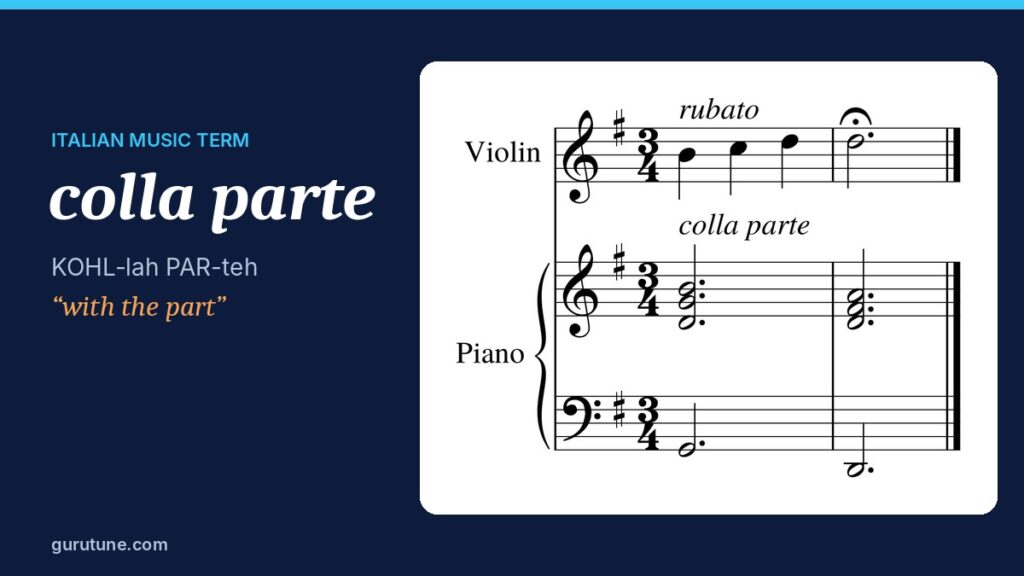
Colla parte is Italian for “with the part”. Musicians use the expression in two different ways, and the score itself usually reveals which one is meant. Knowing the difference saves a lot of confusion in rehearsals.
How to pronounce colla parte
Say it as KOHL-lah PAR-teh. Hold the double L slightly, and give the final E a short, clear sound, as in “bed”.
Meaning one: follow the soloist
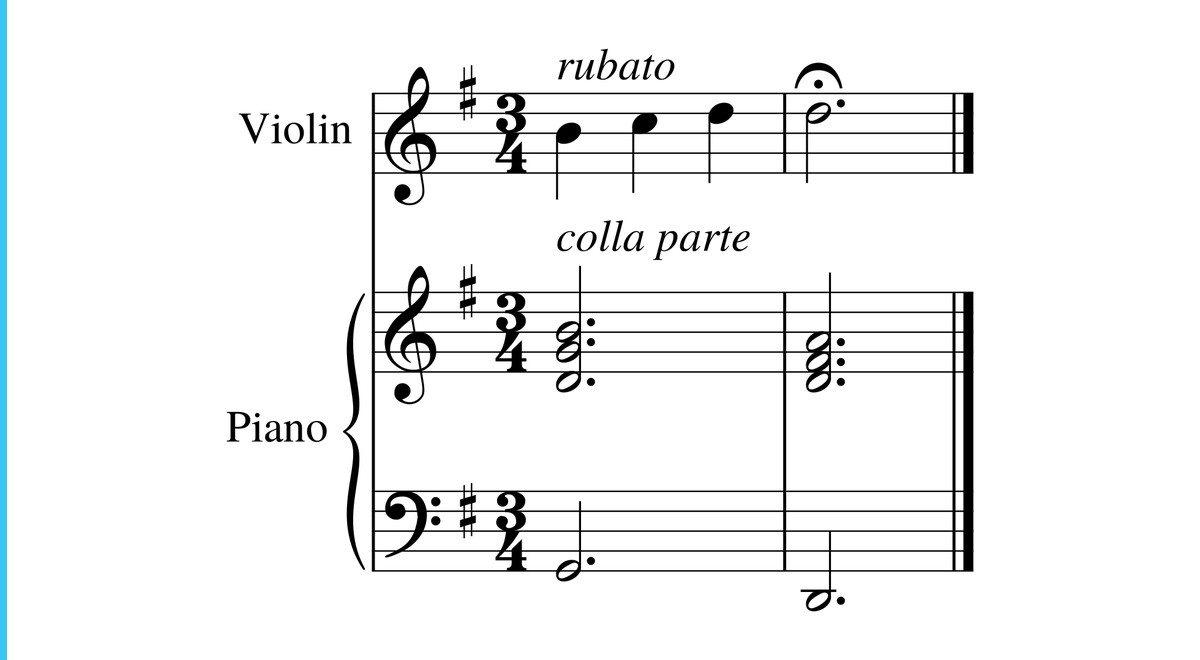
In accompaniment, colla parte works like a general version of colla voce. The pianist or orchestra stops keeping a strict beat and follows whichever part is leading at that moment. The leader might be a singer, a violinist, a cellist or a flautist.
Composers write it where the soloist is expected to play with freedom. Typical places are slow passages, ornaments, fermatas and short cadenzas. The accompanist listens, watches and places each chord with the soloist instead of with the metronome.
Meaning two: double the part note for note
In orchestral and choral scores, colla parte can mean something quite different. Here it tells an instrument to play exactly the same notes as another part, usually a vocal line. This is called doubling.
Doubling was very common in church music of the 1700s. Instruments supported the choir by playing along with the singers, which strengthened the sound and helped the choir stay in tune. Mozart’s music for Salzburg Cathedral is a well known example. In works such as his Missa brevis in D minor, K. 65, three trombones play colla parte with the alto, tenor and bass voices of the choir.
Copyists sometimes saved time this way too. Rather than writing out every note again, they wrote colla parte, or a similar instruction such as col basso, meaning “with the bass”, and the player read the notes from the other line.
How to tell the two meanings apart
Look at what is printed after the words.
- If your own notes are written out and the leading part has free rhythm, you are being asked to follow the soloist
- If your staff is empty or nearly empty, and the instruction points to another line, you are being asked to double that line
- In older choral and church music, doubling is the more likely meaning
- In songs, arias and solo pieces with piano, following is the more likely meaning
When in doubt, ask the conductor or compare with a full score. Both meanings are common enough that experienced musicians check rather than guess.
Colla parte and related terms
Colla voce means “with the voice” and refers only to singers. Col canto means “with the song” and has the same meaning. Col basso tells a player to follow the bass line, which was a standard shortcut in older string parts.
All these expressions share the Italian word “col” or “colla”, which simply means “with the”. Once you know that, many score instructions become easier to read.
Practising both skills
To train following, accompany a recording of a solo instrument playing a slow, expressive piece. Place every chord with the soloist’s notes, however freely they move.
To train doubling, choose one voice in a choral piece and play it on your instrument while listening to the recording. Aim to blend so closely with the singers that your instrument almost disappears into their sound.
Free printable card
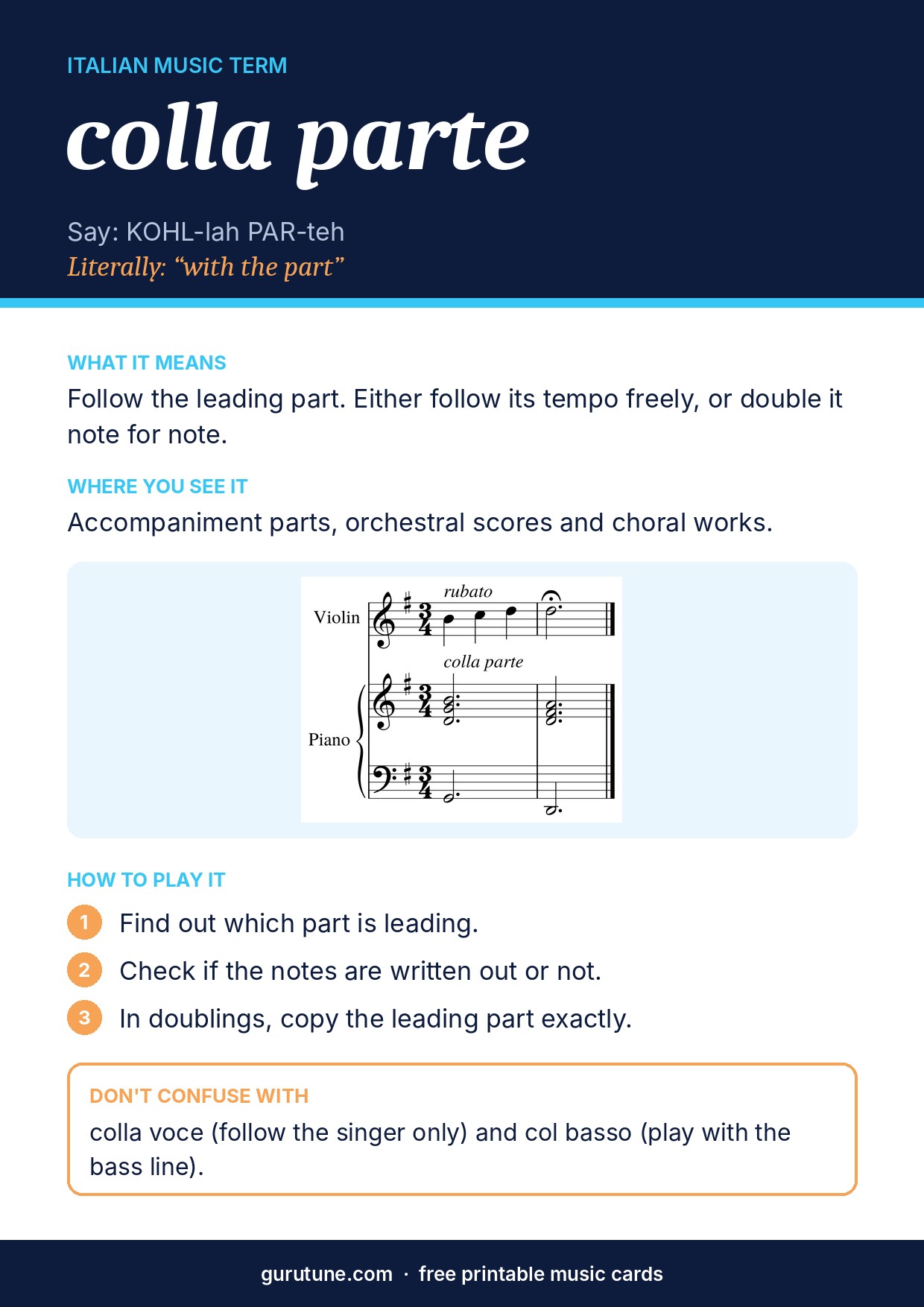
Print this card on A4 and keep it in your music folder or on the stand. Click the image to open it in full size.
Frequently asked questions
What does colla parte mean in music?
Colla parte is Italian for “with the part”. It either asks the accompanist to follow the leading part’s free tempo, or asks an instrument to double another part note for note.
How do you know which meaning of colla parte is intended?
If your notes are written out and the soloist plays freely, follow the soloist. If your staff is empty and points to another line, double that line.
What is the difference between colla parte and colla voce?
Colla voce refers only to a singer. Colla parte refers to whichever part is leading, including instruments.
What does doubling mean in music?
Doubling means that two parts play or sing the same notes, often to make a line stronger or to support singers.
Where can you hear instruments doubling a choir?
Mozart’s Salzburg masses are a well known example. In his Missa brevis in D minor, K. 65, three trombones double the alto, tenor and bass voices.
How do you pronounce colla parte?
It is pronounced KOHL-lah PAR-teh.